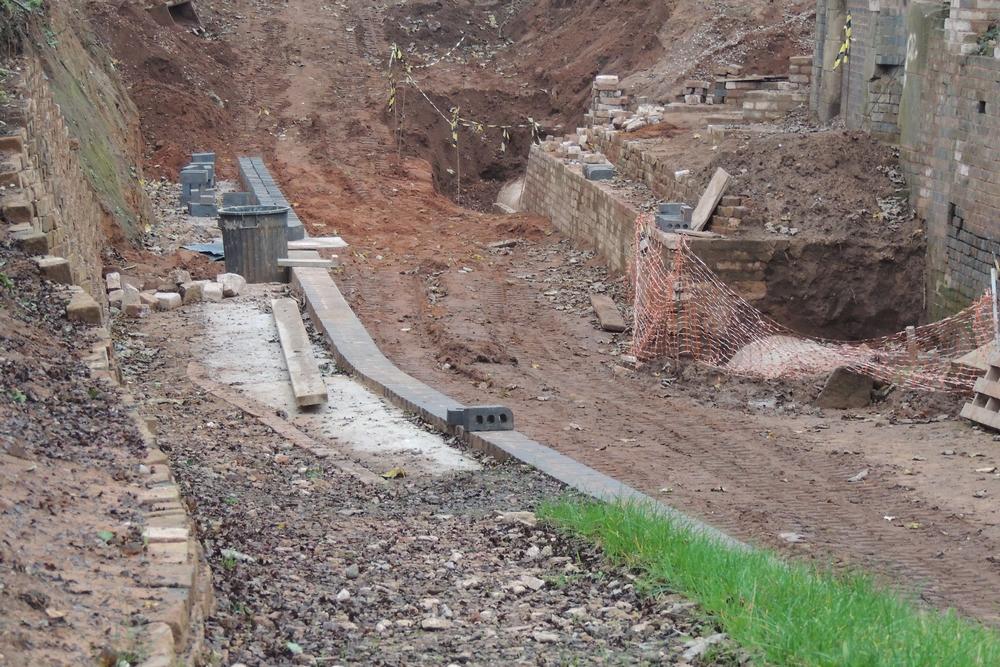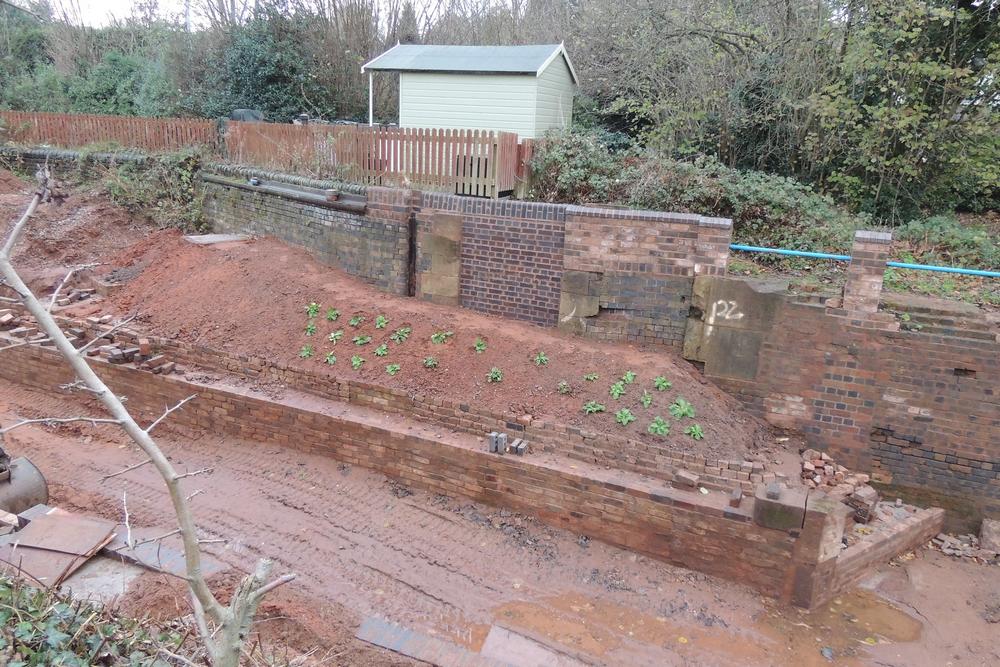
November definitely reminds us that winter is on the way. Crisp cold starts with damp conditions returning by mid afternoon. Also, lots of fallen leaves to contend with before concreting and the odd falling leaf trying to get into the wet concrete. It’s the new north wall where the more interesting work has progressed over the last month or so. The final two supporting buttresses have been built and after spending the last two months constructing them, we have now covered all six buttresses over with soil, so you wouldn’t even know they were there.

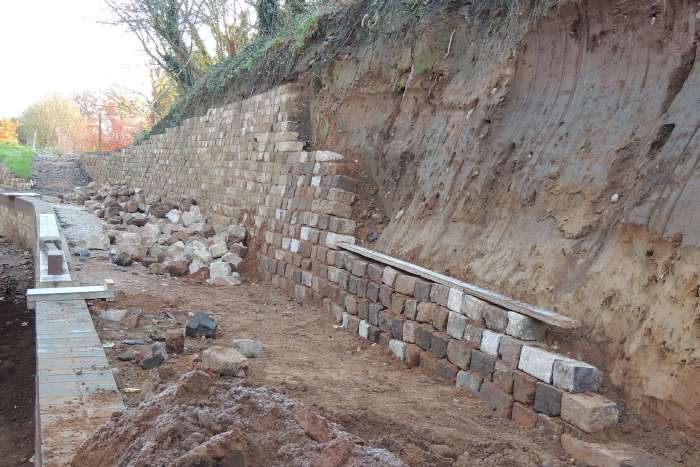
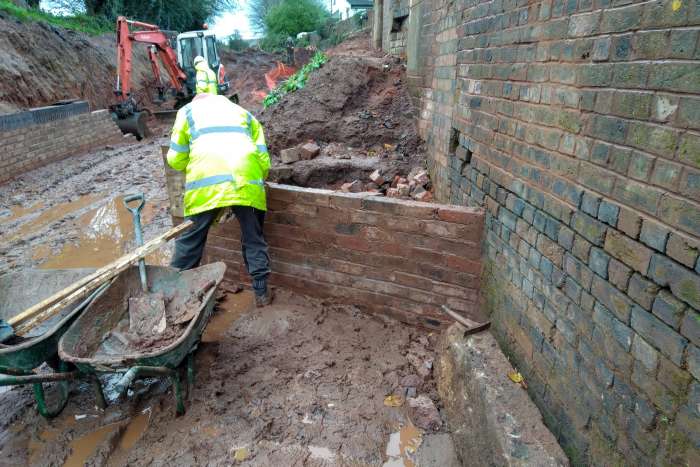
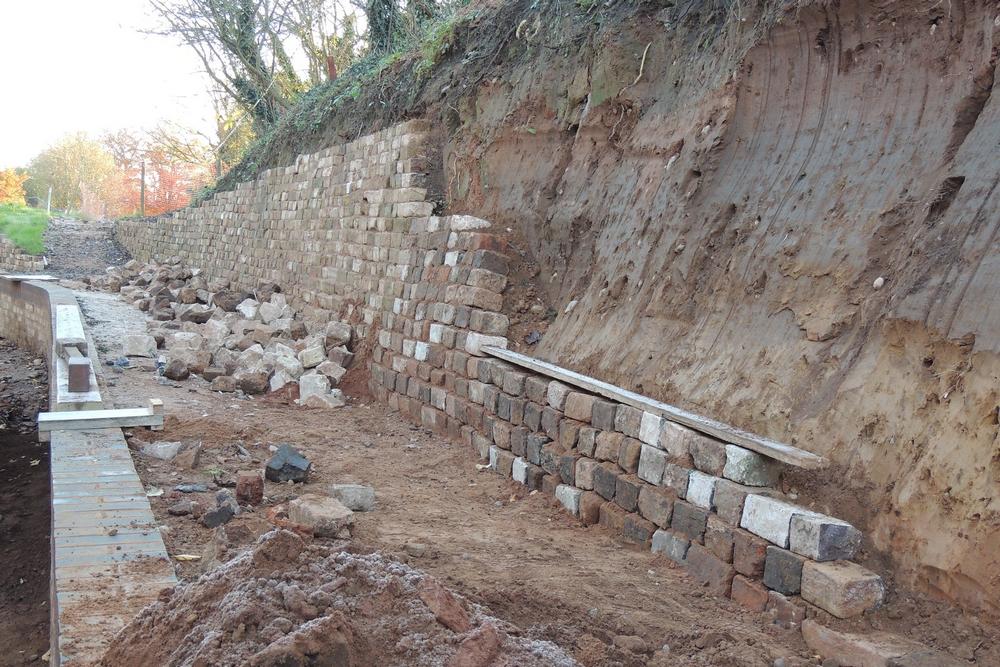
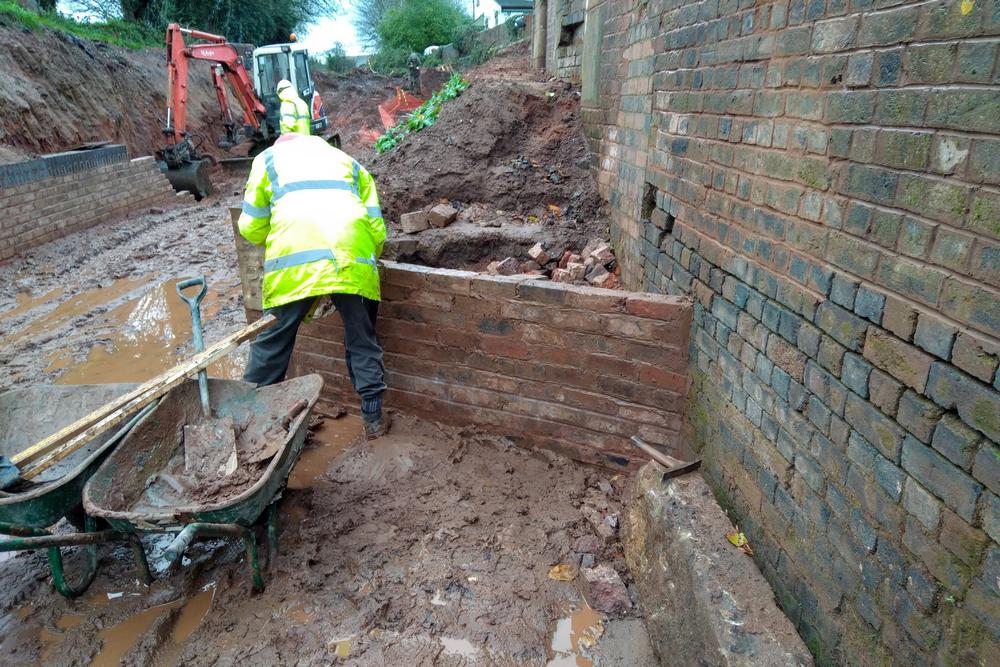
As we started building the north wall in front of the ‘big’ pipe we fairly obviously have to cross over it in order to tie the new wall back into the old lock wall. So we started by excavating around the pipe and shaping a couple of quoin blocks to become the leading edge of the angled wall and hence a rubbing strip or an impact strip for passing boats. It’s been a slow job building this tied wall as the leading edge has also been shaped with chamfered bricks and we have been backfilling with concrete.
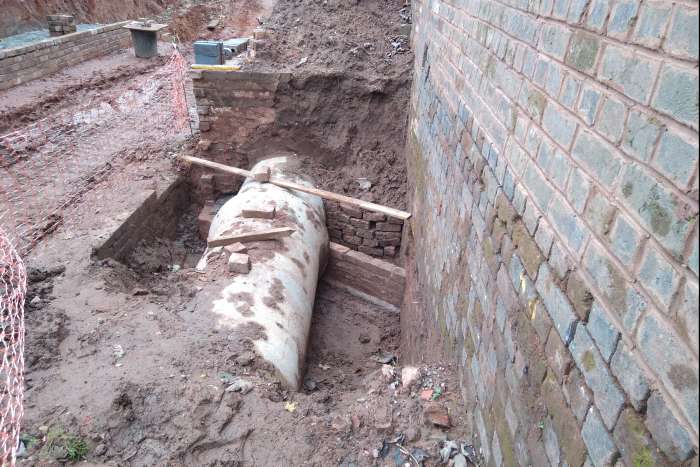
As we have effectively crossed the canal wall over the pipe, at some point heading towards the cottage we will have to cross back over the pipe again on the wider section of canal bed. This will leave a section of pipe that will remain in situ as part of the new wall. We hope that by providing a parallel water channel it will assist boats to traverse this narrow section by providing a path for water displaced in front of the passing boat. We also need to use up all of the old bricks before we convert to sheet piling and we don’t yet know the depth of the firmer sandstone substrata and whether the harder sandstone bedrock will make piling problematic.
The first of three pipe inspection chambers on the approach to Cricket Lane is also getting closer and we will have to deconstruct that whilst being careful to maintain both the flow continuity and the containment provided by the pipe.
To this end we have effectively created a slit trench on the line of the pipe so that Peter can at least explore some of the potential solutions to these issues.
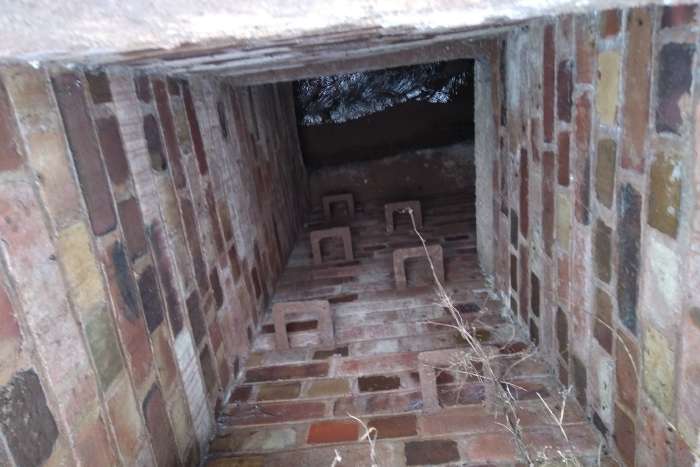
Work otherwise progresses at quite a pace and so we have recently had to relocate brick and block materials in order to create a safe workspace before working on the next section.
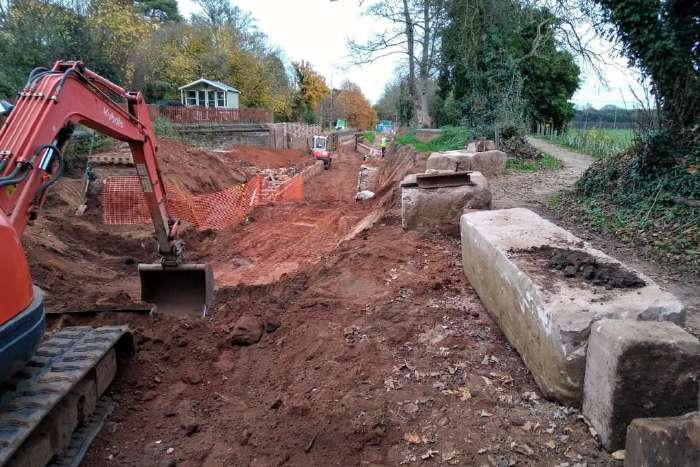


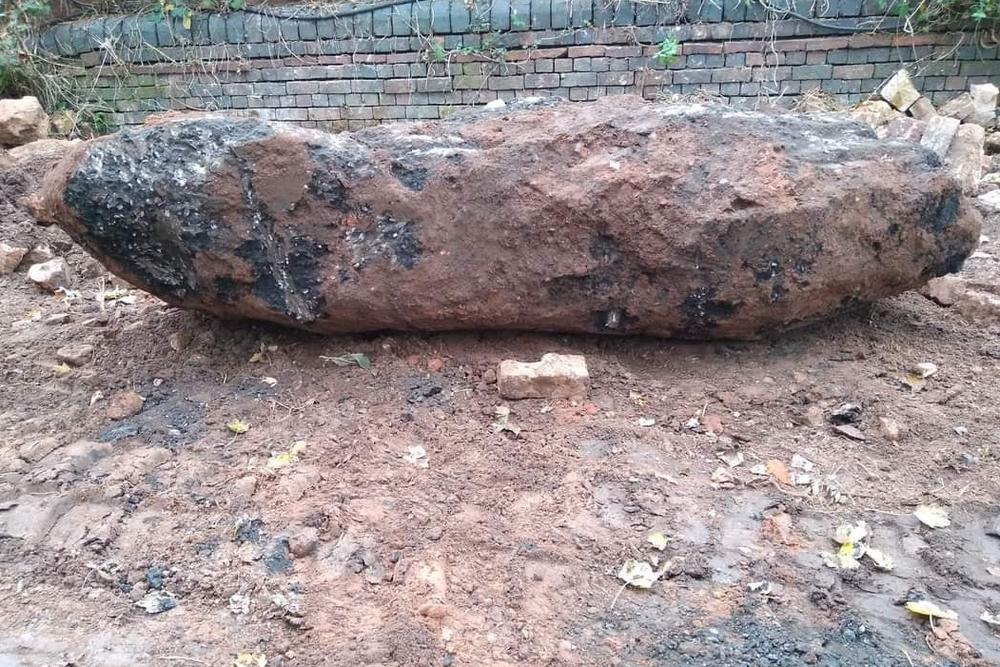
We definitely needed our larger machine as we start to find more and more larger pieces of buried imported material. The assumption is that some very enterprising civil engineering contractors used the canal demolition contract in the 1960’s to clear their yard of any extraneous and surplus construction materials that they had built up over the years. Several large pieces of tarmac and also a section of dropped manhole have been removed so far.
As we clear, sort through and reuse the piles of bricks that were removed as part of the deconstruction of the old south lock wall we are left with a base layer that has been pressed into the soft ground and so we are using our larger machine with its riddle bucket attachment to uncover these, sort through them, separate the soil out and hence tidy up and clear a path for the advancing works.

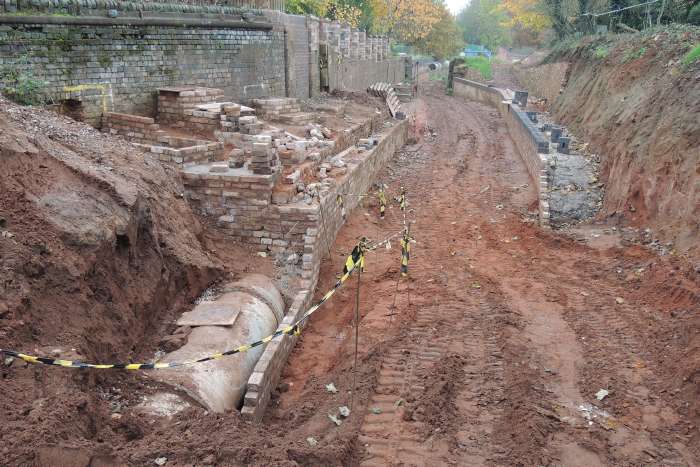

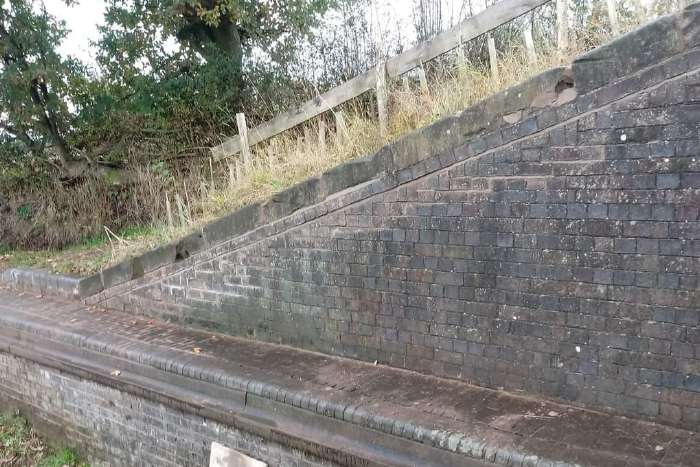
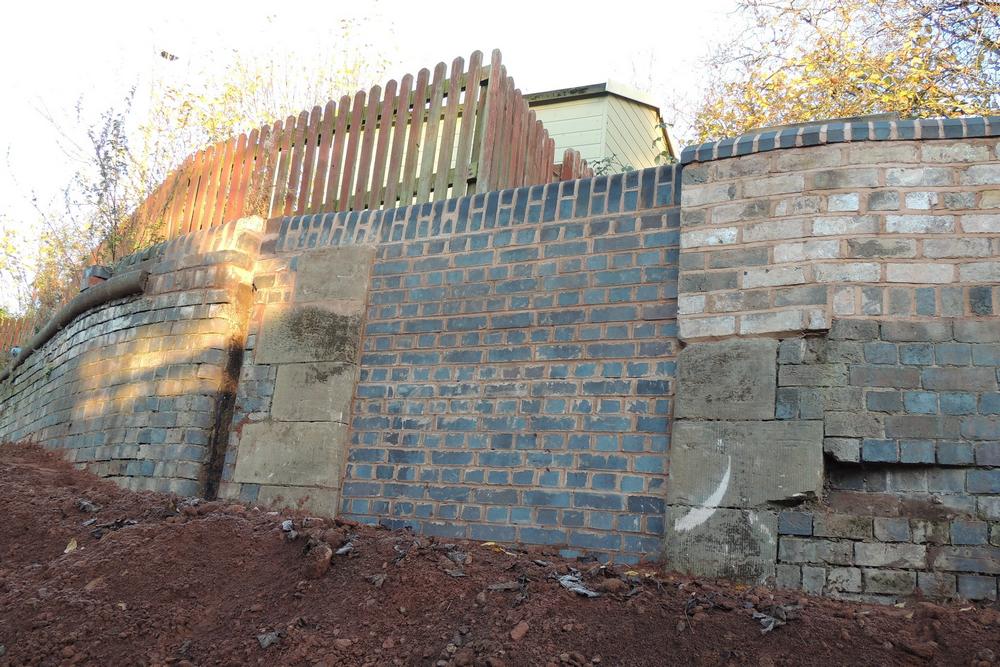
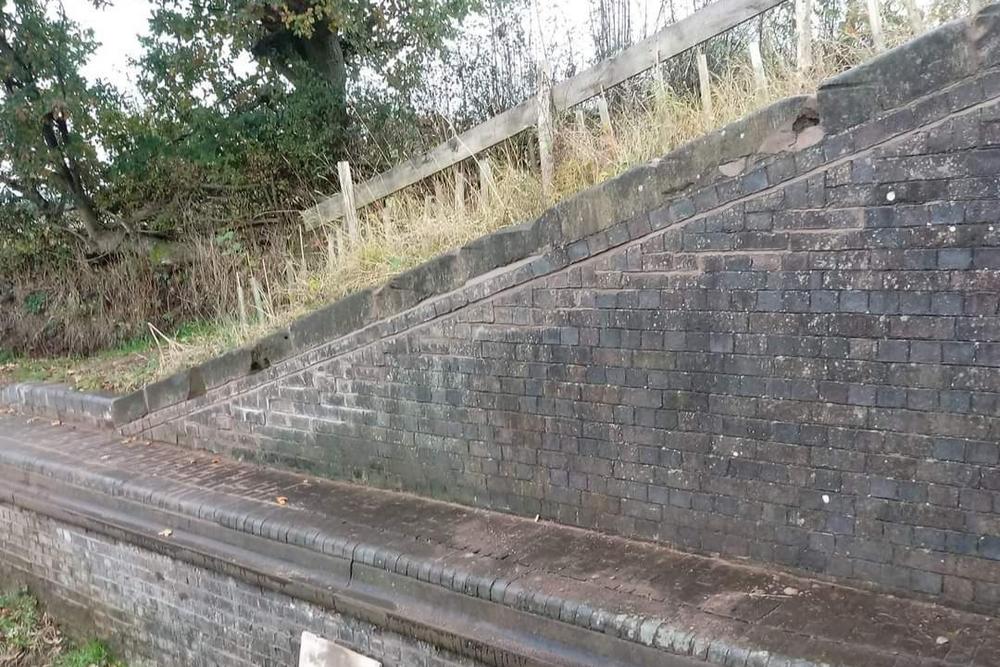
One of the final distinguishing features of old lock 24, the lock wall recess, was remodelled by Brian over the last week in October.
To retain the heritage, blue bricks were used in the new 9" wall and the original cross bond (alternate courses of stretcher and header bricks) was maintained.
We were kindly donated a hundred or so modern orange core holed bricks and so we used these in the hidden rear stretcher courses which meant that we used far less blue bricks.
Michael Babb (November 30th 2021)